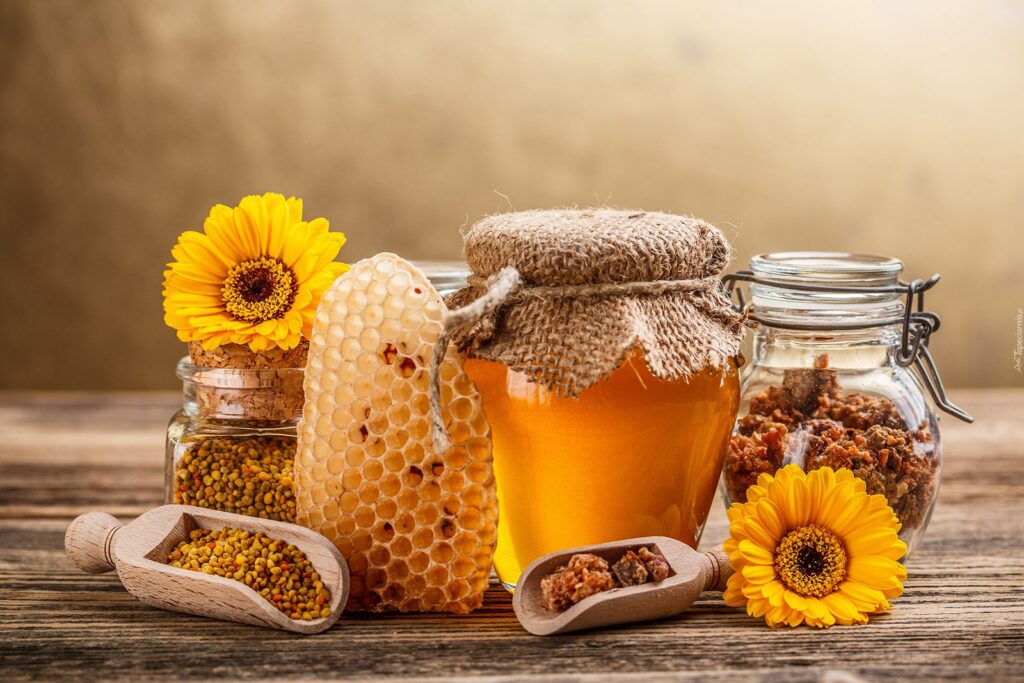
At JK Natural Food Industries, the journey of honey — from collection at the farm to dispatch to customers — is meticulously managed to uphold the highest standards of hygiene, safety, and quality. Every stage of the process is clearly defined, closely monitored, and precisely documented to ensure exceptional results.
Our comprehensive process includes:
-
Sourcing from a strong network of trusted beekeepers
-
Rigorous testing to ensure purity and compliance with safety standards
-
Scientific processing involving melting, filtration, homogenization, and moisture reduction
-
Hygienic packing using food-grade materials
-
Safe and controlled storage in our warehouse before dispatch
JK Natural proudly operates under internationally recognized food safety certifications such as FSSAI and ISO 22000:2018, reinforcing our promise of quality at every step.
1.Natural Honey Collection & Traceability
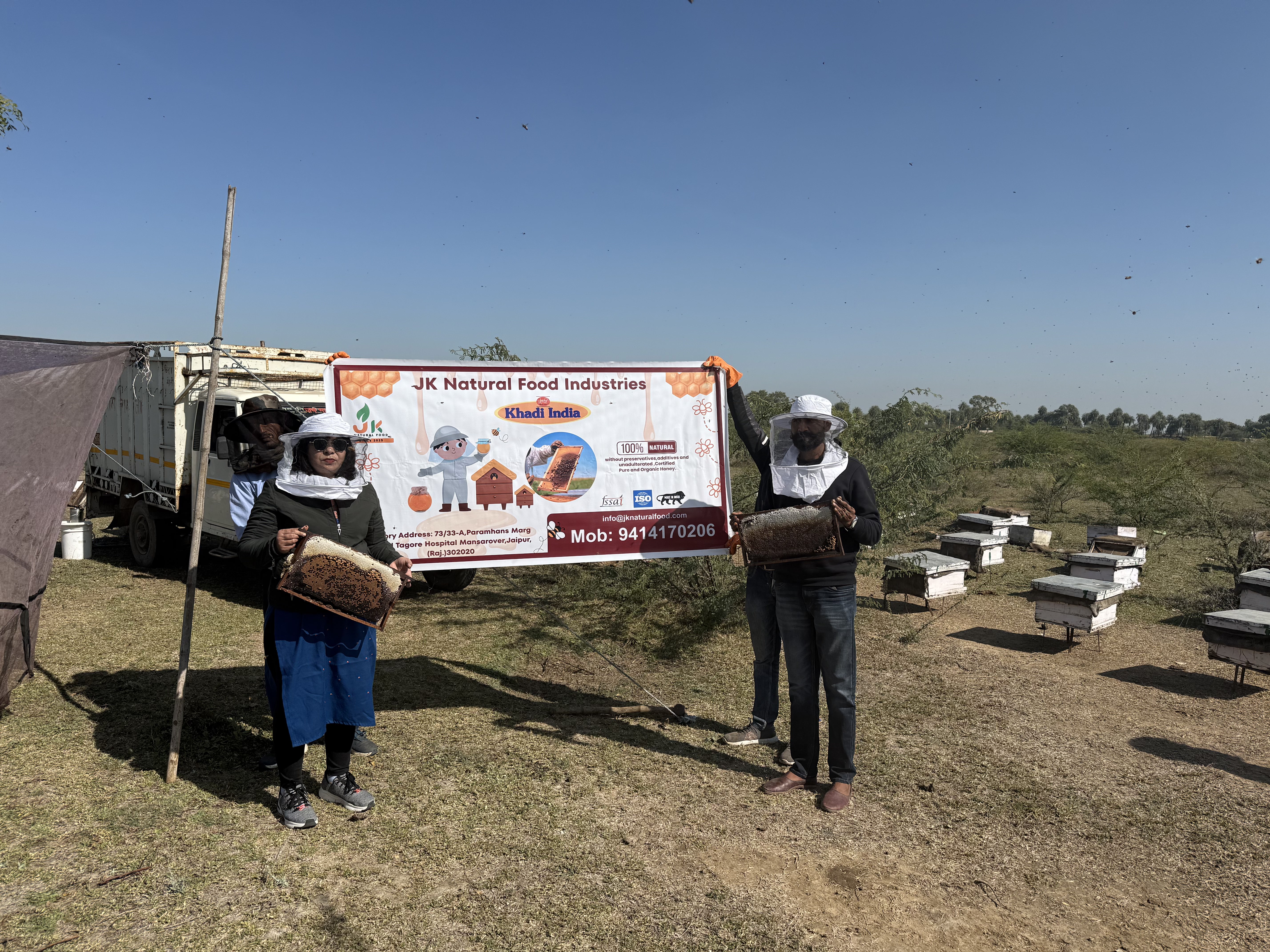

At JK Natural Food Industries, we prioritize transparency and traceability right from the source.
Our trained field collection staff gathers honey directly from beekeepers within 7 days of harvesting,
ensuring optimal freshness and quality.
Each honey container is sequentially marked, capturing vital details such as the beekeeper’s identity and
the farm’s geographic location. The collected honey is first transported to our local collection depots,
strategically located within 50 kilometers of the production areas. These depots act as temporary holding sites before the
honey is moved to our central depot or processing unit.
Beyond collection, these centers also serve as technical support hubs, where farmers receive guidance and
best practices to maintain quality. This entire process ensures full traceability, preserving the integrity
and origin of every batch.
Moreover, all honey collected is 100% GMO-free, aligning with our commitment to natural, unadulterated products.
2.Raw Honey Inspection and Testing
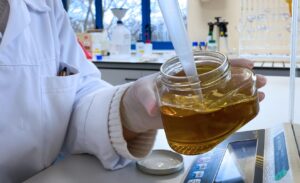
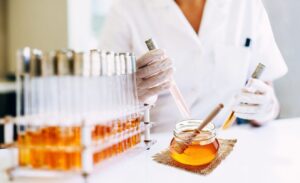
At JK Natural Food Industries, every batch of honey received from our network of partner farms is assigned a unique batch number to ensure full traceability and accurate identification throughout the supply chain.
A composite sample, drawn from each container in the shipment, is forwarded to our in-house laboratory for comprehensive testing. Our stringent quality checks include:
-
Organoleptic (sensory) evaluation
-
Detailed chemical analysis
-
Heavy metal assessment
-
Sugar profiling
-
And compliance with our Residue Monitoring Plan
These tests are conducted to confirm the purity, authenticity, and safety of the honey, while also detecting any potential contamination. Only materials that fully meet the national and international honey quality standards are approved for further use.
Once approved, the honey is aligned with specific batch planning requirements based on customer specifications such as color, floral origin, Fructose-to-Glucose (F/G) ratio, and other tailored parameters.
Standard production batches at JK Natural range from 10 MT to 20 MT, enabling us to deliver high-volume orders with precision and consistency, meeting the exact needs of both domestic and international clients.
3. Honey De-Crystallization & Filtration
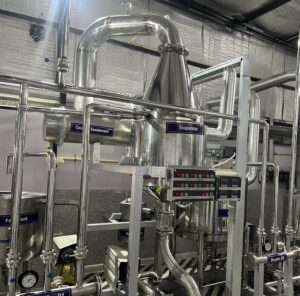
The initial phase of honey processing begins with a carefully controlled melting process designed to improve manageability and maintain purity. This takes place in a custom-engineered stainless steel chamber, where hot air serves as the heating medium. The system is supported by strategically positioned air diffusers with circulation baffles, ensuring uniform temperature distribution and gentle handling of the honey. Melted honey is collected through integrated stainless steel trays, minimizing exposure and maintaining hygiene.
Following melting, the honey is passed through high-grade mesh filters to remove any residual foreign particles, ensuring a clean and natural product.
Our facility has large-capacity stainless steel tanks, each with a volume of 12 kiloliters (KL), capable of processing up to 10 metric tons of honey at a time. These tanks are equipped with propeller-type stainless steel agitators driven by slow-speed motors, which gently homogenize the honey into consistent 20 MT production batches. This step is critical for achieving uniform texture, quality, and compliance with customer-specific parameters.
4. Moisture Reduction and Homogenisation
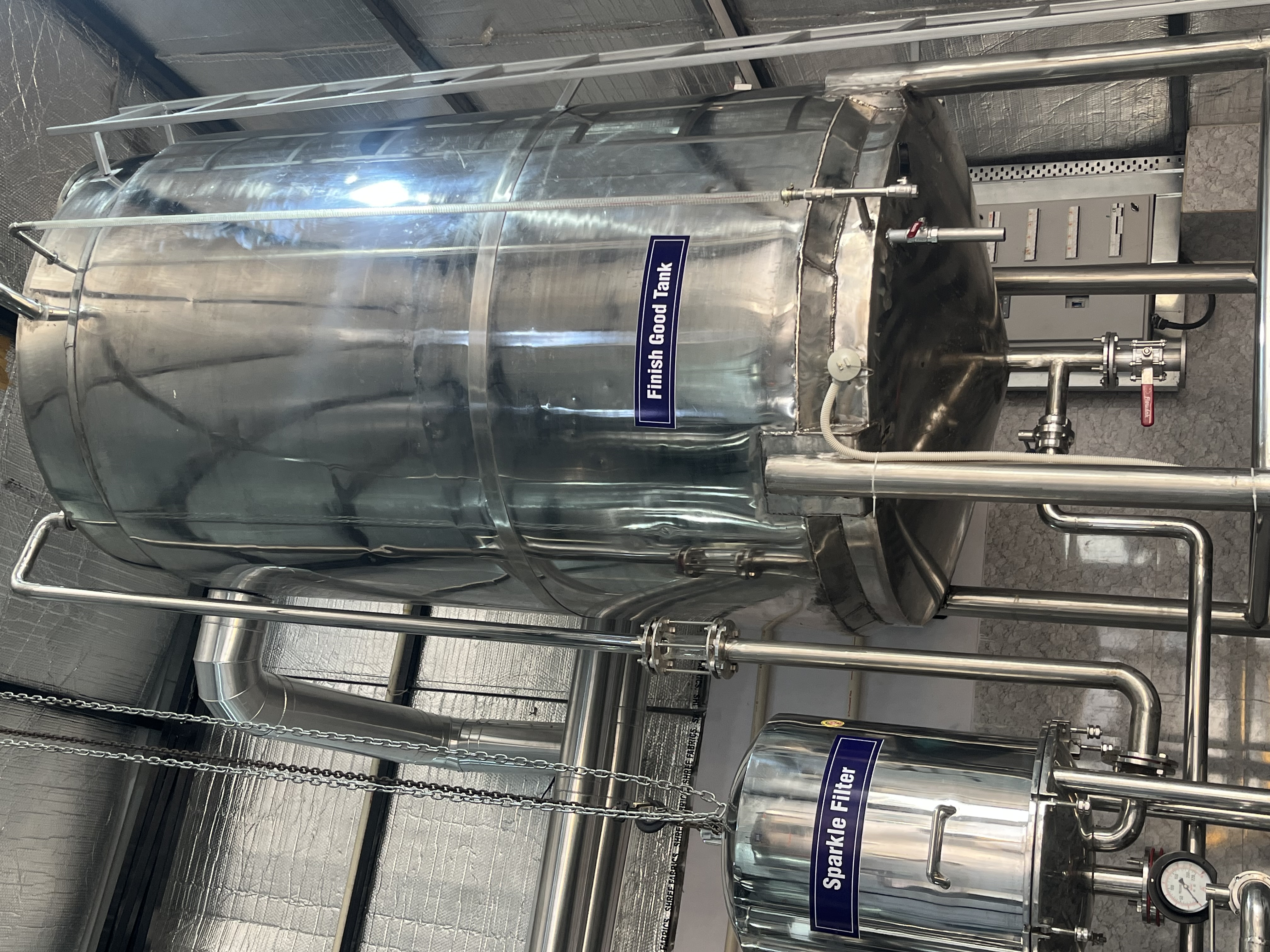
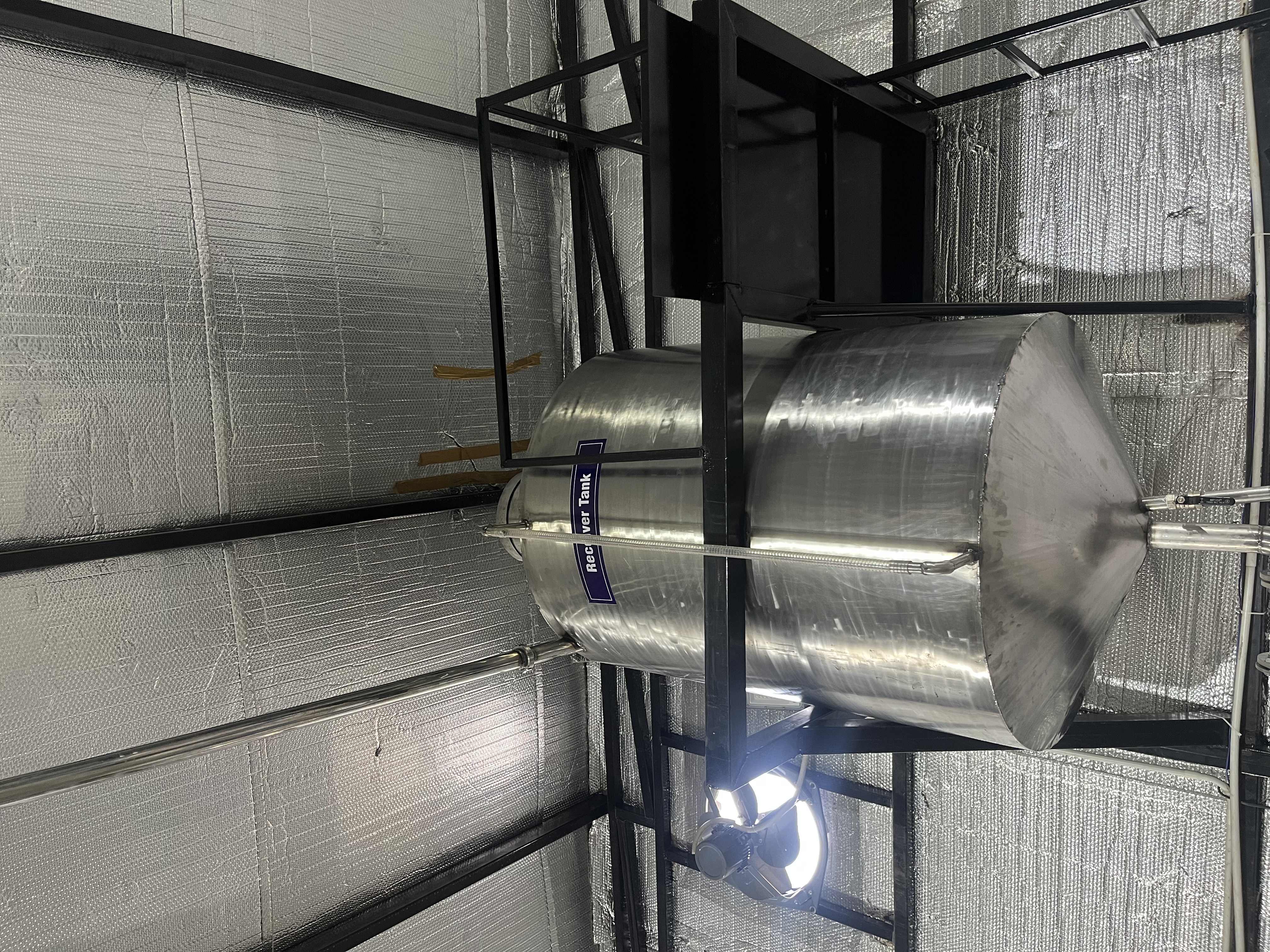
Moisture control and uniformity are critical aspects of our honey processing operations. After the melting phase, honey is transferred to a stainless steel storage tank fabricated from raw SS304 material, with a capacity of 10 metric tons. These tanks are fitted with three-blade stainless steel agitators, operating at slow speeds to ensure gentle yet effective homogenization. To achieve vertical mixing, honey is circulated continuously from the bottom to the top within the tank.
The dehumidification and moisture reduction process involves lowering the honey’s moisture content to below 19%, a standard essential for shelf life, consistency, and export compliance. This is achieved using a heat exchanger and vacuum cone system. Honey from the raw tank flows through the vacuum cone, with precise control via integrated flow meters and valves. The output is rigorously tested to confirm that the moisture content meets the target level.
Once processed, the honey is transferred to finished storage tanks, where moisture readings are recorded at 30-minute intervals to ensure stability and consistency throughout the batch.
Our advanced infrastructure includes:
-
Flash heating and cooling units for thermal treatment
-
Fine filtration systems for clarity and purity
-
Automated pumps for efficient transfer to settling tanks
After the settling period, each batch undergoes final quality checks in our in-house laboratory, ensuring all critical parameters meet both regulatory and client-specific requirements.
5. Packaging & Warehousing
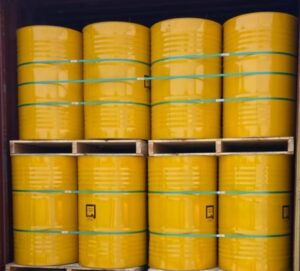
The honey is held within 10MT finished tanks for settling before being packaged either in bulk or retail quantities. In the case of bulk packaging, honey is directed through a final 80-mesh sieve filter and filled using automated machines into 25Kg-50Kg HDPE food-grade plastic JerryCan or 300Kg epoxy-coated MS drums.
For retail packaging, an additional de-waxing and filtration process is carried out before filling. Our automated filling line enables us to pack honey in sizes ranging from 5 g to 25Kg, utilizing food-grade PET or glass bottles, as well as buckets, based on specific requirements.
During the filling process, samples are collected and sent to an external lab for final testing. Our expansive warehouse is equipped with a computer-controlled inventory system, streamlining the process for efficient and well-organized shipment of all honey packed by us.
Quality Control & Inventory Management
During the filling process, representative samples are collected and sent to certified external laboratories for final verification of quality and compliance.
To ensure efficient logistics, our modern warehousing facility is equipped with a computer-controlled inventory management system, enabling streamlined tracking, organized storage, and prompt dispatch of all packed honey, whether for domestic delivery or international export.
Quality is not just a promise — it is a process backed by science and precision. Our state-of-the-art in-house laboratory is fully equipped to conduct comprehensive chemical and microbiological analyses, ensuring that every batch of honey meets the strictest safety and purity standards.
Our testing capabilities include:
-
Antibiotic residue detection
-
C4 sugar analysis
-
Physicochemical profiling
-
Microbial and heavy metal screening
To deliver precise and reliable results, our lab is equipped with cutting-edge instruments, including:
-
EA-IRMS (Elemental Analyzer–Isotope Ratio Mass Spectrometer)
-
LC/MS-MS (Liquid Chromatography with Tandem Mass Spectrometry)
-
HPLC (High-Performance Liquid Chromatography)
-
Gas Chromatographs
-
ELISA Readers
-
Brookfield Viscometer
-
Spectrophotometer
-
Honey Colour Grader
-
Water Activity Analyzer
All analyses are carried out by a team of highly trained and experienced scientists, strictly following national and international standards, including:
-
USFDA
-
EU Codex
-
FSSAI
-
AGMARK
-
BRCs
We adhere to globally recognized testing protocols, including validated methods from AOAC, CODEX, and the EU, as well as national procedures outlined by BRCs and FSSAI, ensuring unparalleled accuracy, credibility, and consistency in our testing processes.